Table of Contents
Pregnancy Nutrition Counselling in Vizag | Top Dietitians
Opting for professional Pregnancy Nutrition Counselling in Vizag (Visakhapatnam) is one of the most impactful clinical investments an expectant mother can make to safeguard both maternal health and optimal fetal development. Maternal nutrition is not simply about eating more food or doubling calorie intake; it is a precise, science-backed discipline that ensures the exact micro- and macronutrient balances required to support embryonic organogenesis, placental vascular growth, maternal blood volume expansion, and late-trimester fetal weight gain. Proper dietary management also plays a critical role in preventing or treating common gestational complications such as Gestational Diabetes Mellitus (GDM), preeclampsia, maternal anemia, and intrauterine growth restriction (IUGR).
Over the past decade, Visakhapatnam has emerged as a premier healthcare hub across coastal Andhra Pradesh, integrating clinical dietetics and clinical nutrition into mainstream maternal care. Leading multi-specialty hospitals, women’s centers, and independent clinical nutrition practices across Vizag now offer personalized prenatal and postnatal dietary counselling. Whether you reside in central healthcare corridors like Siripuram, Maharani Peta, Jagadamba Junction, Ram Nagar, and MVP Colony, or expanding residential sectors in Health City Arilova, Sheela Nagar, Madhurawada, PM Palem, Kancharapalem, and Gajuwaka, expectant mothers across Visakhapatnam have access to expert maternal nutritionists and clinical dietitians.
This comprehensive guide provides an exhaustive roadmap to Pregnancy Nutrition Counselling in Vizag—exploring metabolic changes during pregnancy, trimester-by-trimester nutritional requirements, clinical management of high-risk conditions, regional South Indian pregnancy meal blueprints, cost structures, a selection checklist, 15 detailed FAQs, and structured JSON-LD schema markup.
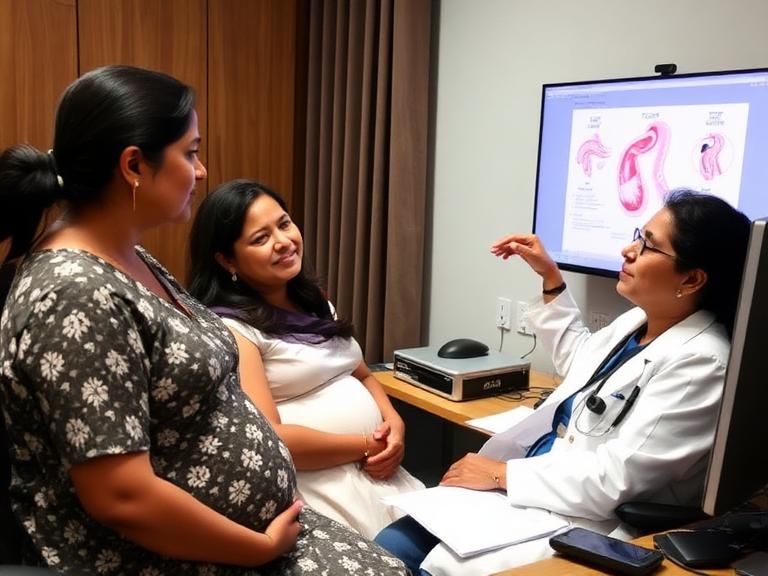
1. The Physiological & Clinical Importance of Maternal Nutrition
During pregnancy, maternal metabolic demand increases significantly to support fetal cellular differentiation, tissue growth, and maternal physiological adaptations. The old adage that a pregnant woman must “eat for two” is a dangerous clinical misconception. In reality, calorie requirements increase only modestly, whereas requirements for specific essential micronutrients—such as Iron, Folic Acid, Calcium, Vitamin D3, Iodine, and Omega-3 DHA—increase by 50% to 100%.
             Nutritional Demand vs. Caloric Demand in Pregnancy
 ┌────────────────────────────────────────────────────────────────────────┐
 │ Caloric Need Increase      : +0% (T1)  ──► +340 kcal (T2) ──► +450 kcal (T3)│
 │                                                                        │
 │ Micronutrient Need Increase: +50% to +100% across all trimesters       │
 │ (Folate, Iron, Calcium, Vitamin D, Iodine, DHA, B12, Zinc)            │
 └────────────────────────────────────────────────────────────────────────┘
Without structured nutritional guidance, an unmonitored diet can easily lead to excess gestational weight gain (increasing C-section risks) or micronutrient deficiencies that compromise fetal neurodevelopment and maternal health.
Key Clinical Outcomes Mediated by Nutrition Counselling:
- Prevention & Control of Gestational Diabetes (GDM): Custom carbohydrate counting and low-glycemic index (GI) meal structuring regulate postprandial blood glucose without requiring immediate medical escalation to insulin in many cases.
- Management of Maternal Anemia: Hemoglobin levels frequently drop due to physiological hemodilution. Tailored dietary iron enhancement combined with vitamin C synergists boosts red blood cell production.
- Optimal Fetal Growth & Birth Weight: Ensures the fetus achieves its genetic growth potential while preventing both intrauterine growth restriction (IUGR) and fetal macrosomia ($>4.0\text{ kg}$).
- Reduction of Preeclampsia Risk: Balanced calcium supplementation ($1,500–2,000\text{ mg/day}$) combined with adequate antioxidants and controlled sodium intake helps maintain healthy placental perfusion and vascular tone.
2. Trimester-by-Trimester Nutritional Requirements & Clinical Diet Plans
Maternal nutrient requirements evolve significantly across the three trimesters. A certified pregnancy nutritionist in Vizag customizes meal protocols based on physiological demands and individual symptoms.
              Trimester Nutritional Focus & Macro Breakdown
 ┌────────────────────────────────────────────────────────────────────────┐
 │ 1st Trimester: Neural Tube Formation & Nausea Control (Folate, B6, Zinc)│
 │ 2nd Trimester: Skeletal Growth & Blood Volume (Calcium, Iron, Protein) │
 │ 3rd Trimester: Brain Development & Rapid Weight Gain (DHA, Calories)   │
 └────────────────────────────────────────────────────────────────────────┘
First Trimester (Weeks 1 to 13+6): Folic Acid, Organogenesis, & Nausea Management
During early pregnancy, embryonic cellular division and neural tube closure occur rapidly. The primary goal is meeting critical micronutrient requirements while navigating morning sickness, hyperemesis, and food aversions.
- Key Nutrient Priorities:
- Folate / Methylfolate ($600–800\text{ mcg/day}$): Critical for neural tube defect (NTD) prevention (spina bifida, anencephaly).
- Vitamin B6 (Pyridoxine – $25–50\text{ mg/day}$): Clinically proven to reduce morning sickness and nausea.
- Zinc ($11–13\text{ mg/day}$): Essential for early embryonic cell division and immune regulation.
- Dietary Strategy: Small, frequent, dry carbohydrate-based meals (e.g., toasted whole-grain bread, dry idlis, puffed rice) eaten before rising to settle morning nausea. Hydration is maintained with electrolyte-rich coconut water, lime water, and clear ginger infusions.
Second Trimester (Weeks 14 to 27): Caloric Surplus, Protein, Calcium, & Iron
The second trimester marks rapid fetal tissue growth, bone ossification, and a expansion of maternal blood volume. An additional caloric intake of approximately $340\text{ kcal/day}$ is required.
- Key Nutrient Priorities:
- Protein ($75–90\text{ g/day}$): Builds fetal muscle, organ tissue, and placental architecture.
- Elemental Iron ($27–40\text{ mg/day}$): Supports hemoglobin synthesis for expanded maternal blood volume.
- Elemental Calcium ($1,200\text{ mg/day}$) + Vitamin D3 ($2,000\text{ IU/day}$): Drives fetal bone mineralization while preserving maternal bone density.
- Dietary Strategy: Integrating high-quality lean protein sources (paneer, sprouted pulses, eggs, lean fish, chicken, curd) at every meal, paired with dark leafy green vegetables and citrus fruits to optimize non-heme iron absorption.
Third Trimester (Weeks 28 to 40+): Brain Maturation, DHA, & Energy Reserves
During the final stretch, the fetus gains up to $200\text{ grams}$ per week, accumulating glycogen and fat stores. Fetal brain tissue undergoes a massive growth spurt, making omega-3 fatty acids essential. An extra $450\text{ kcal/day}$ is required.
- Key Nutrient Priorities:
- Docosahexaenoic Acid (DHA – $200–300\text{ mg/day}$): Essential for fetal brain development, retinal function, and cognitive mapping.
- Complex Carbohydrates & Dietary Fiber ($28–35\text{ g/day}$): Prevents third-trimester constipation and acid reflux caused by uterine pressure on the stomach.
- Choline ($450\text{ mg/day}$): Supports placental function and neurodevelopment.
- Dietary Strategy: Fiber-rich whole grains (millets, brown rice, oats), healthy fats (walnuts, chia seeds, flaxseeds, ghee in moderation), and low-mercury fish or algae-derived DHA supplements. Smaller, frequent meals prevent severe heartburn.

3. Clinical Nutrition Protocols for High-Risk Pregnancy Conditions
A major focus of pregnancy nutrition counselling in Visakhapatnam is managing high-risk medical conditions where dietary therapy is a primary line of treatment.
               Medical Nutrition Therapy (MNT) Protocols
 ┌────────────────────────────────────────────────────────────────────────┐
 │ 1. Gestational Diabetes (GDM): Low GI, carb counting, 3 meals + 3 snacks│
 │ 2. Maternal Anemia          : Iron + Vitamin C, zero tea/coffee with food│
 │ 3. Preeclampsia / HTN       : Calcium boost, controlled sodium, fluids  │
 │ 4. Excessive / Deficient GWG: Calibrated calorie-to-protein ratio      │
 └────────────────────────────────────────────────────────────────────────┘
1. Gestational Diabetes Mellitus (GDM)
Diagnosed via the DIPSI / OGTT test (2-hour plasma glucose $\ge 140\text{ mg/dL}$), GDM requires strict Medical Nutrition Therapy (MNT):
- Carbohydrate Distribution: Complex carbohydrates are distributed evenly across 3 main meals and 3 small snacks to eliminate glucose spikes.
- Glycemic Index Focus: Replacing refined white rice with fiber-dense alternatives like brown rice, ragi (finger millet), foxtail millet, or whole wheat chapattis paired with generous portions of vegetables and protein.
- Bedtime Snack Protocol: A complex-carb plus protein bedtime snack (e.g., warm milk with almonds or a boiled egg) prevents overnight hypoglycemia and early-morning rebound hyperglycemia (Somogyi effect).
2. Gestational Iron-Deficiency Anemia
Prevalent in coastal Andhra Pradesh due to poor dietary iron bioavailability and tea/coffee consumption near meals:
- Enhancing Iron Absorption: Pairing plant-based iron sources (spinach, drumstick leaves, pomegranate, dates, jaggery in non-GDM) with Vitamin C rich enhancers (lemon juice, amla, tomatoes).
- Eliminating Absorption Inhibitors: Instructing mothers to avoid consuming tea, coffee, milk, or calcium supplements within 2 hours of iron-rich meals or iron tablets due to tannin and phytate binding.
3. Excessive or Inadequate Gestational Weight Gain (GWG)
Following Institute of Medicine (IOM) clinical guidelines:
- Normal Pre-Pregnancy BMI ($18.5–24.9$): Target weight gain is $11.5–16\text{ kg}$.
- Overweight / Obese Pre-Pregnancy BMI ($\ge 25.0$): Target weight gain is limited to $5–11.5\text{ kg}$. Nutritionists restrict empty sugars and saturated fats while maintaining high micronutrient density.
- Underweight Pre-Pregnancy BMI ($< 18.5$): Target weight gain is $12.5–18\text{ kg}$. Nutritionists prescribe energy-dense, nutrient-packed smoothies, nuts, and healthy fats.
4. Customized South Indian (Andhra) Pregnancy Meal Blueprint
Pregnancy nutritionists in Visakhapatnam design practical meal plans using locally available, culturally familiar Andhra dietary staples while modifying cooking methods to enhance nutritional density.
             Sample Balanced Andhra Pregnancy Meal Plan
 ┌────────────────────────────────────────────────────────────────────────┐
 │ Early Morning : Warm lemon water + soaked almonds & walnuts            │
 │ Breakfast     : Ragi dosa / Moong dal chilla + coconut chutney + egg    │
 │ Mid-Morning   : Tender coconut water + bowl of papaya (ripe) / pomegranate│
 │ Lunch         : Brown rice / Millet + Leafy green Pappu + Fish / Paneer│
 │ Evening Snack : Roasted chana / Sprout salad + buttermilk              │
 │ Dinner        : Multigrain chapattis + Mixed vegetable curry + Curd    │
 │ Bedtime       : Warm turmeric milk with a pinch of nut powder           │
 └────────────────────────────────────────────────────────────────────────┘
Daily Food Group Distribution Strategy:
- Grains & Millets (5–6 Servings): Ragi, jowar, foxtail millet, unpolished brown rice, whole wheat.
- Proteins (3–4 Servings): Pesara pappu (moong dal), kandhi pappu (toor dal), chickpeas, paneer, low-fat curd, boiled eggs, grilled chicken, and fresh local fish (e.g., Korrameenu, Seer fish/Vanjaram—cooked thoroughly).
- Vegetables & Greens (4–5 Servings): Thotakura (amaranth), Gongura, Avisa koora, drumstick leaves, ridge gourd, bottle gourd, carrots, and beetroot.
- Healthy Fats & Seeds (2 Servings): Cold-pressed sesame/groundnut oil in moderation, A2 cows ghee ($1–2\text{ tsp/day}$), soaked almonds, walnuts, pumpkin seeds, and flaxseeds.
5. Locality Breakdown & Nutrition Counselling Centers in Vizag
Expectant mothers in Visakhapatnam can access certified clinical dietitians and pregnancy nutrition specialists across major healthcare corridors:
             Key Healthcare Corridors Across Vizag
 ┌──────────────────────────────────────────────────────────────────┐
 │ Central Region : Maharani Peta, Jagadamba, Siripuram, Ram Nagar  │
 │ North Region   : Health City Arilova, PM Palem, Madhurawada      │
 │ South/West Zone: Sheela Nagar, Gajuwaka, MVP Colony, Kancharapalem│
 └──────────────────────────────────────────────────────────────────┘
Provider Matrix Across Vizag Locality Zones:
- Central Medical Belt (Siripuram, Maharani Peta, Jagadamba Junction, Ram Nagar, MVP Colony):
- Medicover Woman & Child Hospital (Jagadamba Junction): Features an in-house clinical nutrition and dietetics department that collaborates with senior obstetricians for GDM management, anemia correction, and high-risk pregnancy meal planning.
- Lotus Hospitals for Women & Children (Siripuram): Offers dedicated prenatal diet counselling sessions, lactation nutrition guidance, and weight management programs.
- Dr. Ramya Sadaram Clinic / Blissful Pregnancy (MVP Colony & Kancharapalem): Combines obstetric care with holistic maternal nutrition and lifestyle planning for expectant couples.
- Independent Clinical Dietitians (Siripuram & Ram Nagar): Leading private diet clinics offering personalized maternal diet charts and metabolic tracking.
- North Suburban Belt (Health City Arilova, PM Palem, Madhurawada):
- Rainbow Children’s Hospital & BirthRight (Health City Arilova): Provides high-end maternal clinical nutritionists offering GDM management, twin-pregnancy dietary protocols, and post-delivery weight recovery plans.
- Apollo Health City (Arilova / Ram Nagar): Features clinical dietitians specializing in complex medical conditions during pregnancy, such as renal complications, preeclampsia, and thyroid disorders.
- Madhurawada Wellness & Diet Clinics: Local nutritional practices offering convenient consultations for suburban families.
- South & Industrial Belt (Sheela Nagar, Gajuwaka, Kancharapalem):
- KIMS Cuddles (Sheela Nagar): Modern women’s facility with dedicated nutritionists offering personalized antenatal diet charts, gestational diabetes management, and postnatal recovery nutrition.
- Gajuwaka Maternal & Wellness Clinics: Serves industrial residential communities with accessible pregnancy dietary guidance.
6. Estimated Cost Matrix for Pregnancy Nutrition Counselling in Vizag
Having transparent pricing information helps families plan for dietary consultations and follow-up reviews throughout pregnancy:
Estimated Cost Comparison Matrix
| Clinical Nutrition Service / Package | Description & Duration | Fee Range (INR) |
| Initial Clinical Nutrition Assessment | In-depth 45-min evaluation, body composition check, custom diet chart | ₹800 – ₹1,800 |
| Follow-up Review Consultation | 20-min progress review, diet adjustments, blood report analysis | ₹400 – ₹800 |
| Full Trimester Nutrition Package (3 Visits) | Cover T1, T2, and T3 transition diet plan modifications | ₹2,000 – ₹4,500 |
| Specialized Gestational Diabetes (GDM) Package | Intensive 4-week blood glucose tracking & meal plan revisions | ₹2,500 – ₹5,500 |
| Complete Antenatal + Postnatal Care Package | Covers all 9 months of pregnancy + 3 months of lactation counselling | ₹5,000 – ₹12,000 |
| Single Lactation & Postpartum Diet Consultation | Focuses on breastmilk production, recovery, and nutrient replenishment | ₹700 – ₹1,500 |
7. Selection Checklist for Choosing a Pregnancy Nutritionist in Vizag
Use this practical checklist when evaluating pregnancy nutrition counselors in Visakhapatnam:
           Pregnancy Nutrition Specialist Selection Checklist
 ┌────────────────────────────────────────────────────────────────────────┐
 │ [ ] Holds formal qualifications in Clinical Nutrition & Dietetics       │
 │     (M.Sc. Foods & Nutrition / Registered Dietitian - RD)             │
 │ [ ] Specializes specifically in Maternal, Fetal, & Pediatric Nutrition   │
 │ [ ] Collaborates directly with your primary Obstetrician                │
 │ [ ] Designs realistic diet plans based on local South Indian food habits │
 │ [ ] Provides specialized Medical Nutrition Therapy (MNT) for GDM/Anemia  │
 │ [ ] Offers ongoing follow-up support (WhatsApp/Phone/In-Person)        │
 └────────────────────────────────────────────────────────────────────────┘

8. Frequently Asked Questions (FAQs)
Q1: Why is professional pregnancy nutrition counselling important?
Professional nutrition counselling provides a customized, evidence-based meal plan tailored to your specific trimester needs, pre-pregnancy BMI, blood test results, and medical conditions. It helps prevent birth complications, supports optimal fetal growth, and controls conditions like gestational diabetes and anemia.
Q2: When should I book my first pregnancy nutrition consultation in Vizag?
The ideal time for an initial assessment is during the first trimester (Weeks 6 to 10). Early counselling establishes proper folate supplementation, manages morning sickness, and sets a healthy weight gain trajectory from the start.
Q3: Is it true that a pregnant woman needs to “eat for two”?
No, that is a common myth. During the first trimester, calorie needs do not increase at all. Calorie needs increase by only about $340\text{ kcal/day}$ in the second trimester and $450\text{ kcal/day}$ in the third trimester. What does double is the requirement for specific micronutrients like Iron, Calcium, and Folate.
Q4: How does a nutritionist help manage Gestational Diabetes (GDM) in Vizag?
A clinical dietitian designs a low-glycemic index (GI) Medical Nutrition Therapy (MNT) plan that distributes carbohydrates evenly across 3 main meals and 3 small snacks. This controls postprandial glucose spikes without compromising fetal nutrition, often avoiding the need for insulin therapy.
Q5: Can pregnancy nutrition counselling help cure or manage morning sickness?
Yes. Dietitians prescribe strategic dietary adjustments—such as eating dry, high-complex-carbohydrate foods before rising, integrating Vitamin B6 rich foods, avoiding greasy triggers, and using ginger-infused fluids—to significantly reduce nausea and vomiting.
Q6: What foods should be strictly avoided during pregnancy in Vizag?
Avoid raw or undercooked meat and eggs, unpasteurized dairy products, mercury-rich fish (like shark or swordfish), raw sprouts, unwashed raw vegetables, excess caffeine ($>200\text{ mg/day}$), and alcohol. Raw or unripe papaya and pineapple should also be consumed cautiously as advised by your doctor.
Q7: Are South Indian foods like idli, dosa, and rice suitable during pregnancy?
Yes, but they should be optimized. Fermented foods like idli and dosa are great for gut health, but those with GDM should switch to millet-based dosas (ragi, oats, moong dal chilla) and pair them with protein (boiled eggs, sprouted pulses) and fiber rather than relying solely on polished white rice.
Q8: How can diet help improve low hemoglobin (anemia) during pregnancy?
A dietitian pairs iron-rich foods (dark leafy greens like amaranth and drumstick leaves, legumes, eggs, lean meats) with Vitamin C enhancers (lemon juice, amla) to boost iron absorption. They will also advise you to avoid consuming tea, coffee, or calcium supplements within 2 hours of iron-rich meals.
Q9: How much weight should I gain during my pregnancy?
Target weight gain depends on your pre-pregnancy Body Mass Index (BMI):
- Normal BMI ($18.5–24.9$): $11.5\text{ to }16\text{ kg}$
- Overweight BMI ($25.0–29.9$): $7\text{ to }11.5\text{ kg}$
- Obese BMI ($\ge 30.0$): $5\text{ to }9\text{ kg}$
- Underweight BMI ($< 18.5$): $12.5\text{ to }18\text{ kg}$
Q10: Are supplements necessary if I eat a healthy, balanced diet during pregnancy?
Yes. Even with a balanced diet, meeting the heightened physiological requirements for Iron ($27–40\text{ mg}$), Folic Acid ($600–800\text{ mcg}$), Calcium ($1,200\text{ mg}$), and Vitamin D3 through food alone is difficult. Routine prenatal supplements prescribed by your obstetrician are essential.
Q11: What is the role of DHA in third-trimester pregnancy nutrition?
Docosahexaenoic Acid (DHA) is an omega-3 fatty acid essential for fetal brain development, cognitive function, and vision. During the third trimester, the fetal brain undergoes rapid growth, making daily DHA intake ($200–300\text{ mg}$) crucial.
Q12: Do hospitals in Visakhapatnam have in-house pregnancy nutritionists?
Yes. Major maternity hospitals in Vizag—including Medicover Woman & Child Hospital, Rainbow BirthRight, KIMS Cuddles, Lotus Hospitals, and Apollo Health City—have resident clinical dietitians who collaborate directly with attending obstetricians.
Q13: Can a pregnancy nutritionist help with postnatal milk supply and recovery?
Yes. Postnatal or lactation nutrition counselling focuses on galactagogue-rich foods (fenugreek, garlic, oats, dill leaves, cumin, shattered almonds) to promote breastmilk production, support maternal tissue recovery, and assist with healthy weight management.
Q14: How frequent are follow-up nutrition appointments during pregnancy?
Typically, follow-ups occur once every 4 to 6 weeks in an uncomplicated pregnancy to adjust diet plans as you enter new trimesters. In high-risk pregnancies (GDM, severe anemia, twin pregnancies), consultations may occur every 1 to 2 weeks.
Q15: How much does pregnancy nutrition counselling cost in Visakhapatnam?
An initial comprehensive assessment ranges from ₹800 to ₹1,800, while follow-up reviews cost between ₹400 and ₹800. Full-pregnancy packages range from ₹2,000 to ₹12,000 depending on package length and complexity.