Table of Contents
Painless Delivery in Vizag | Epidural Painless Labor Specialists
Choosing Painless Delivery in Vizag (Visakhapatnam) has revolutionized modern maternity care, empowering expectant mothers across coastal Andhra Pradesh to experience natural childbirth without the severe pain historically associated with labor contractions. Clinically known as Obstetric Epidural Analgesia, painless labor allows a woman to remain fully conscious, relaxed, and active throughout the birthing process while effectively blocking the intense pain signals generated by uterine contractions and cervical dilation.
In recent years, Visakhapatnam has emerged as a state-of-the-art medical destination for advanced maternal-fetal care. With the establishment of dedicated mother-and-child tertiary hospitals, modern Labor Delivery Recovery (LDR) suites, 24/7 consultant obstetric anesthesiologists, and Level-III Neonatal Intensive Care Units (NICU), women in Vizag no longer have to choose between severe labor pain or an unnecessary surgical C-section. From central healthcare zones like Maharani Peta, Jagadamba Junction, Siripuram, Ram Nagar, and MVP Colony to fast-growing residential hubs in Health City Arilova, Sheela Nagar, Madhurawada, Gajuwaka, and Gopalapatnam, maternity centers across Vizag routinely offer safe, protocol-driven painless normal delivery services.
This comprehensive clinical guide serves as an authoritative resource on Painless Delivery in Vizag—covering the medical mechanisms of epidural analgesia, step-by-step procedures, maternal and fetal safety, myth-busting evidence, hospital networks across Visakhapatnam, exact cost structures, a patient preparation checklist, 15 detailed FAQs, and structured JSON-LD schema markup.
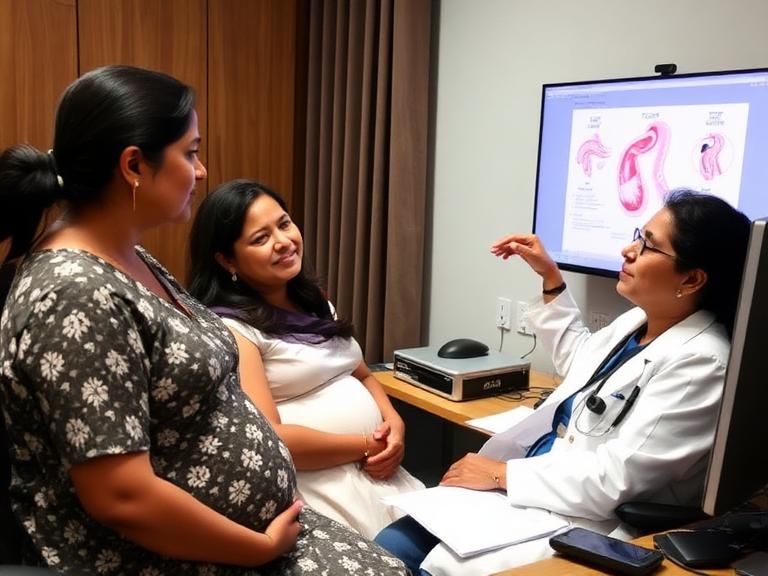
1. What is Painless Delivery? Understanding Epidural Analgesia
A Painless Normal Delivery refers to a vaginal birth conducted under the administration of regional analgesia—most commonly a lumbar epidural. Unlike general anesthesia, which induces unconsciousness, or a surgical spinal block, which completely paralyzes the lower body for surgery, epidural analgesia selectively targets and dampens visceral and somatic pain nerve fibers without compromising motor strength or maternal awareness.
                   Anatomy of Lumbar Epidural Analgesia
 ┌────────────────────────────────────────────────────────────────────────┐
 │ Epidural Space: Located between Ligamentum Flavum & Dura Mater         │
 │ Vertebral Levels: Usually placed at L3–L4 or L4–L5 Lumbar Interspace   │
 │ Target Nerves: Pain-conducting spinal nerve roots (T10 to S4)          │
 │ Infusion Type: Ultra-low dose Local Anesthetic + Micro-Opioid Adjuvant  │
 └────────────────────────────────────────────────────────────────────────┘
The Neurophysiology of Labor Pain
Labor pain originates from two primary anatomical sources as labor progresses:
- First Stage of Labor (Visceral Pain): Driven by uterine muscle contractions and cervical stretching. Pain impulses travel along sympathetic nerve fibers entering the spinal cord at the T10 to L1 spinal segments. This pain is typically felt as intense cramping across the lower abdomen, back, and thighs.
- Second Stage of Labor (Somatic Pain): Driven by the stretching and distension of the pelvic floor, vagina, and perineum as the baby’s head descends. Pain impulses travel via the pudendal nerve into the S2 to S4 sacral segments.
By introducing a fine, flexible catheter into the lumbar epidural space, a consultant anesthesiologist bathes these nerve roots in an ultra-dilute local anesthetic solution (such as Ropivacaine or Bupivacaine) combined with a small adjuvant (such as Fentanyl). This blocks pain transmission while preserving the mother’s ability to move her legs and actively push her baby out during delivery.
2. Step-by-Step Clinical Procedure of Epidural Administration
Understanding how an epidural is administered alleviates anxiety for expectant parents in Vizag. The procedure is performed under sterile conditions by a specialist obstetric anesthesiologist once active labor is established.
                Epidural Administration Workflow
 ┌────────────────────────────────────────────────────────────────────────┐
 │ Step 1: Pre-procedure IV Hydration & Vital Sign Baselines              │
 │ Step 2: Positioning (Sitting upright curved position or Side-lying)   │
 │ Step 3: Skin Antisepsis & Local Numbing at Lumbar Injection Site       │
 │ Step 4: Epidural Needle Insertion (Tuohy needle) using Loss of Resistance│
 │ Step 5: Threading the Flexible Catheter & Needle Withdrawal            │
 │ Step 6: Test Dose Administration & Continuous Infusion Pump Setup      │
 └────────────────────────────────────────────────────────────────────────┘
Detailed Clinical Steps:
- Pre-procedure Assessment & Hydration: The anesthesiologist reviews maternal airway, blood reports (platelet count must be $> 1,000,000/\mu\text{L}$ or $> 100\text{k}/\mu\text{L}$), and baseline blood pressure. An intravenous (IV) fluid bolus of $500\text{ to }1000\text{ mL}$ Ringer’s Lactate is infused to prevent transient hypotension.
- Maternal Positioning: The mother sits on the edge of the LDR bed with her chin tucked to her chest and back curved outward (like a cat), or lies on her left side in a curled fetal position. This position widens the space between the lumbar vertebrae.
- Local Anesthetic Skin Numbing: The lower back skin is thoroughly disinfected. A tiny needle injects a local numbing agent (Lignocaine) into the skin, making the subsequent epidural placement virtually sting-free.
- Epidural Needle & Catheter Placement: A specialized needle (Tuohy needle) is carefully guided into the epidural space using the “Loss of Resistance” technique. A microscopic, hair-thin catheter is threaded through the needle into the space, and the needle is withdrawn.
- Securing the Line & Test Dose: The catheter is taped securely along the mother’s spine over her shoulder. A tiny test dose is administered to confirm correct catheter placement, followed by the primary analgesic dose via a computer-controlled continuous infusion pump or Patient-Controlled Epidural Analgesia (PCEA) pump.
- Onset of Relief: Within 10 to 15 minutes of the initial dose, severe contraction pain fades into a soft, manageable pressure sensation.
3. Types of Painless Labor Techniques Available in Vizag
Modern maternity hospitals in Visakhapatnam offer tailored regional analgesia protocols to suit individual labor progression:
                  Painless Labor Regional Protocols
                               │
        ┌──────────────────────┼──────────────────────┐
        ▼                      ▼                      ▼
 [Standard Epidural]   [Walking Epidural / CSE]   [PCEA Pump]
  - Continuous drip     - Fast onset (Spinal)     - On-demand button
  - Low-concentration   - Motor function intact   - Safety lockouts
  - High pain relief    - Allows movement          - Controlled dosage
1. Standard Continuous Low-Dose Epidural
A continuous micro-infusion of low-concentration Ropivacaine ($0.0625\%\text{ to }0.125\%$) with Fentanyl is delivered via an automated pump throughout labor. This maintains a steady, uninterrupted level of pain relief.
2. Combined Spinal-Epidural (CSE / “Walking Epidural”)
In a CSE, a tiny dose of anesthetic is introduced directly into the intrathecal (spinal) space before the epidural catheter is placed.
- Benefit: Provides almost instantaneous pain relief within 2 to 3 minutes.
- Mobility: Uses minimal local anesthetic concentrations, preserving motor strength so the mother can walk around her birth suite, sit on a birthing ball, or change positions easily.
3. Patient-Controlled Epidural Analgesia (PCEA)
PCEA gives the mother a handheld button connected to a pre-programmed epidural pump. When contractions intensify, she can push the button to administer a small, safe top-up dose. Programmed safety lockouts prevent any possibility of overdosing.

4. Primary Benefits of Painless Delivery for Mother and Newborn
Painless labor offers significant physiological and emotional benefits for both mother and child:
               Key Clinical Advantages of Painless Delivery
 ┌────────────────────────────────────────────────────────────────────────┐
 │ Maternal Benefits:                                                     │
 │ • Eliminates labor pain while preserving complete consciousness         │
 │ • Prevents maternal hyperventilation and exhaustion during long labor  │
 │ • Blunts dangerous blood pressure spikes in preeclamptic mothers       │
 │ • Leaves uterine muscles rested for efficient 2nd-stage pushing        │
 │                                                                        │
 │ Neonatal Benefits:                                                     │
 │ • Maintains stable placental blood perfusion during contractions      │
 │ • Prevents fetal acidosis caused by maternal stress hormones           │
 │ • Enables immediate "Golden Hour" skin-to-skin bonding and nursing     │
 └────────────────────────────────────────────────────────────────────────┘
Detailed Clinical Benefits:
1. Conservation of Maternal Energy
Prolonged, unmedicated labor can lead to maternal hyperventilation, dehydration, metabolic acidosis, and physical collapse. By removing severe pain, epidural analgesia allows the mother to rest, sleep, or stay calm during cervical dilation, preserving crucial physical stamina for pushing during the second stage.
2. Reduction of Stress Hormones (Catecholamines)
Severe pain triggers massive releases of maternal adrenaline and cortisol. High adrenaline levels cause uterine blood vessels to constrict, reducing oxygen supply to the placenta. Painless delivery suppresses this stress response, maintaining healthy, consistent blood flow to the baby.
3. Optimal Management of Maternal Hypertension
For women suffering from Gestational Hypertension or Preeclampsia, labor pain can drive blood pressure to dangerously high levels, increasing stroke risk. Epidural analgesia gently lowers systemic vascular resistance, helping stabilize maternal blood pressure naturally during labor.
4. Instant Conversion Readiness for Emergency Surgery
If unexpected fetal distress, cord prolapse, or placental abruption occurs during labor, the pre-existing epidural catheter can be immediately injected with a stronger surgical-grade anesthetic. This allows the team to perform an emergency C-section within minutes without wasting precious time placing a new spinal or resorting to general anesthesia.
5. Debunking Myths vs. Clinical Facts About Epidural Delivery
Despite its proven safety record worldwide, several misconceptions about epidural analgesia persist. Here is what modern clinical research confirms:
                   Myth vs. Clinical Fact Matrix
 ┌────────────────────────────────────────────────────────────────────────┐
 │ MYTH 1: "Epidurals cause permanent chronic back pain."                 │
 │ FACT   : Studies show back pain post-delivery is caused by pregnancy   │
 │          hormones (relaxin) & posture changes, not epidurals.          │
 │                                                                        │
 │ MYTH 2: "An epidural will force me to have a C-section."               │
 │ FACT   : Large clinical trials prove epidurals do NOT increase overall │
 │          Cesarean delivery rates.                                      │
 │                                                                        │
 │ MYTH 3: "The baby will be born drugged or sleepy."                     │
 │ FACT   : Local anesthetics act locally in the spinal canal with minimal│
 │          systemic absorption into the fetal bloodstream.               │
 │                                                                        │
 │ MYTH 4: "You cannot push when you have an epidural."                   │
 │ FACT   : Low-dose epidurals block pain nerves while leaving motor      │
 │          nerves active, allowing guided, effective pushing.            │
 └────────────────────────────────────────────────────────────────────────┘
6. Potential Side Effects, Risks, and Medical Management
While epidural analgesia is exceptionally safe, like any medical procedure, it carries potential minor side effects that are easily managed by experienced obstetric and anesthesia teams in Vizag:
Common Side Effects & Management Protocols:
- Transient Maternal Hypotension (Blood Pressure Drop):
- Mechanism: The epidural temporarily relaxes blood vessels in the lower body.
- Management: Managed proactively with pre-infusion IV fluids, left-lateral positioning, and small IV doses of vasopressors (such as Ephedrine or Mephentermine) if needed.
- Mild Postpartum Insertion Site Tenderness:
- Mechanism: Minor tissue inflammation where the catheter rested in the lower back.
- Management: Self-limiting within 2 to 4 days; responds well to warm compresses and simple paracetamol.
- Shivering or Mild Itching (Pruritus):
- Mechanism: Side effect of micro-opioid adjuvants (Fentanyl) or temperature regulation adjustments in the body.
- Management: Harmless and resolves spontaneously as the drug wears off; anti-pruritic medications can be given if bothersome.
- Post-Dural Puncture Headache (PDPH):
- Incidence: Occurs in less than $1\%\text{ to }2\%$ of cases if the epidural needle inadvertently pierces the dura mater.
- Management: Treated with bed rest, oral caffeine, aggressive hydration, and, in persistent cases, an epidural blood patch.
- Slight Lengthening of the Second Stage:
- Mechanism: Reduced sensation may slightly delay the spontaneous urge to push.
- Management: The obstetric specialist allows an extra hour for passive fetal descent and provides guided pushing instructions.
7. Major Healthcare Corridors & Painless Delivery Hospitals in Vizag
Visakhapatnam features advanced maternity facilities equipped with round-the-clock anesthesiologists, birthing suites, and NICU support across three key geographical corridors:
             Key Healthcare Corridors Across Vizag
 ┌──────────────────────────────────────────────────────────────────┐
 │ Central Region : Maharani Peta, Jagadamba, Siripuram, Ram Nagar  │
 │ North Region   : Health City Arilova, PM Palem, Madhurawada      │
 │ South/West Zone: Sheela Nagar, Gajuwaka, Kancharapalem, MVP      │
 └──────────────────────────────────────────────────────────────────┘
Leading Hospitals & Painless Delivery Specialists in Vizag:
- Central Medical Corridor (Maharani Peta, Jagadamba Junction, Siripuram, Ram Nagar, MVP Colony):
- Medicover Woman & Child Hospital (Jagadamba Junction / KGH Down Road): Premier 150-bed maternity center with 24/7 dedicated obstetric anesthesiologists, advanced LDR suites, and Level-III NICU. Senior normal delivery specialists include Dr. R. Vidya Rama (26+ yrs exp), Dr. Reddi Geeta Vandana (33+ yrs exp), Dr. M. Radhika (26+ yrs exp), and Dr. B. Lakshmi Kondamma (23+ yrs exp).
- Lotus Hospitals for Women and Children (Siripuram): Renowned birthing center offering natural birthing suites and painless labor. Senior consultants include Dr. I. Vani (35+ yrs exp) and Dr. Santhi Meher Peddi.
- Dr. Ramya Sadaram Clinic / Blissful Pregnancy (MVP Colony & Kancharapalem): Led by Dr. Ramya Sadaram (MBBS, DGO, DNB, FMAS, FRM, Childbirth Educator, 10+ yrs exp), specializing in painless labor preparation, birthing plans, and natural birth support.
- Tirumala Vijaya Hospital (MVP Colony): Features senior specialists like Dr. Hema Malini Pallekonda (Gynaecologist & Fetal Medicine Specialist).
- North Suburban Belt (Health City Arilova, PM Palem, Madhurawada):
- Apollo Health City (Arilova / Ram Nagar): Super-specialty facility featuring senior obstetricians like Dr. Suniti Polisetti and Dr. Vidya Konduri (14+ yrs exp) backed by expert cardiac and neuro-anesthesiologists.
- Rainbow Children’s Hospital & BirthRight (Health City Arilova): Tertiary perinatal hub featuring specialized LDR birthing suites, advanced epidural labor protocols, and Level-III NICU backing.
- Vedanta Women & Children’s Hospital (PM Palem / Madhurawada): Serves northern suburban communities with dedicated labor rooms and painless delivery care.
- South & Industrial Zone (Sheela Nagar, Gajuwaka, Kancharapalem):
- KIMS Cuddles (Sheela Nagar): Modern women and children hospital offering painless delivery protocols, high-risk obstetric care, and Level-III NICU facilities.
- Latha Hospital & Janani Nursing Home (Gajuwaka): Serves industrial and residential communities in Gajuwaka with experienced obstetricians including Dr. K. Vidyullata (Latha Hospital) and Dr. K.V. Sudha Madhuri (Janani Nursing Home).
8. Estimated Cost Matrix for Painless Delivery in Visakhapatnam
Having transparent cost expectations helps families plan effectively for maternity care in Vizag. Painless delivery packages typically include hospital stay, LDR suite charges, obstetrician fees, anesthesiologist fees, epidural drug consumables, and routine nursing care:
Estimated Cost Comparison Matrix
| Medical Service / Delivery Package Category | Independent Nursing Home / Clinic | Tertiary / Corporate Hospital |
| Normal Delivery Doctor Consultation (Per Visit) | ₹300 – ₹500 | ₹600 – ₹1,200 |
| Pre-Anesthetic Evaluation (PAC Clearance) | ₹500 – ₹800 | ₹1,000 – ₹1,800 |
| Standard Normal Vaginal Delivery (NVD Package) | ₹30,000 – ₹50,000 | ₹55,000 – ₹95,000 |
| Painless Epidural Analgesia Add-On Charges | ₹10,000 – ₹15,000 | ₹15,000 – ₹25,000 |
| Total Painless Normal Delivery Package Cost | ₹40,000 – ₹65,000 | ₹70,000 – ₹1,20,000 |
| Emergency C-Section Conversion (If Required) | ₹50,000 – ₹75,000 | ₹90,000 – ₹1,50,000 |
| Level-III NICU Care (Per Day, If Required) | ₹4,000 – ₹7,000 | ₹8,000 – ₹18,000 |
Note: Package rates vary depending on the room category selected (general ward, semi-private, private room, or luxury LDR birthing suite), choice of specialist, and duration of hospital stay (typically 2 to 3 days for painless normal delivery). Cashless insurance processing is widely available across major corporate hospitals in Vizag.
9. Patient Checklist for Planning a Painless Delivery in Vizag
Use this step-by-step preparation checklist during your third trimester:
               Painless Delivery Readiness Checklist
 ┌────────────────────────────────────────────────────────────────────────┐
 │ [ ] Consult your obstetrician by Week 32 to express your desire for    │
 │     a painless epidural delivery.                                      │
 │ [ ] Complete Pre-Anesthetic Evaluation (PAC) blood tests (CBC, Platelet│
 │     Count, Coagulation Profile, PT/INR).                               │
 │ [ ] Verify that your hospital has a 24/7 resident anesthesiologist     │
 │     and Level-III NICU on-site.                                        │
 │ [ ] Confirm cashless health insurance or TPA package approval for      │
 │     painless delivery add-on charges.                                  │
 │ [ ] Attend a birth preparation class to learn guided pushing techniques│
 │     and labor breathing exercises.                                     │
 └────────────────────────────────────────────────────────────────────────┘

10. Frequently Asked Questions (FAQs)
Q1: What is a painless delivery, and how does it work in Vizag hospitals?
A painless delivery is a normal vaginal birth conducted using Obstetric Epidural Analgesia. A specialist anesthesiologist places a small, catheter into the lumbar epidural space of the mother’s lower back. Local pain-relieving medication continuously bathes the spinal nerves, blocking labor pain while keeping the mother fully alert and able to push her baby out naturally.
Q2: When is the epidural administered during labor?
An epidural is usually administered once the mother enters active labor—typically when the cervix is dilated to 3 to 4 centimeters with regular contractions. However, modern protocols allow epidurals to be placed earlier or later depending on maternal pain levels and clinical assessment.
Q3: Does painless delivery increase the chances of needing a C-section?
No. Extensive global research and clinical trials conducted by the American College of Obstetricians and Gynecologists (ACOG) prove that epidural analgesia does not increase the rate of Cesarean sections. It simply provides pain relief during normal labor.
Q4: Can I walk or move after getting an epidural?
Yes. Modern centers in Vizag use low-concentration anesthetics or Combined Spinal-Epidural (CSE) techniques—often called “walking epidurals.” This selectively blocks pain nerve fibers while preserving motor strength, allowing mothers to move in bed, sit on a birthing ball, or walk with assistance.
Q5: How long does the pain-relieving effect of an epidural last?
The epidural catheter remains securely taped to the mother’s back throughout labor and is connected to an automated infusion pump. Pain relief continues seamlessly for as long as labor lasts. Once the baby and placenta are delivered, the catheter is painless to remove, and full sensation returns within 2 to 4 hours.
Q6: Will I still be able to push the baby out with an epidural?
Yes. Because modern epidural mixtures use low anesthetic concentrations, motor nerves remain functional. You will still feel pressure as the baby descends into the birth canal, and your obstetric specialist and nurse will guide you on when and how to push effectively.
Q7: Does an epidural affect the baby?
No. Local anesthetic drugs injected into the epidural space enter the mother’s bloodstream in tiny amounts, resulting in minimal placental transfer. The baby is born alert, responsive, and ready for immediate skin-to-skin bonding and breastfeeding.
Q8: Is the epidural procedure itself painful?
No. Before the epidural needle is inserted, the anesthesiologist injects a tiny amount of local numbing agent into the skin of your lower back. You may feel a brief sting, followed by a light pressure sensation as the catheter is positioned.
Q9: Who should NOT get an epidural for painless delivery?
An epidural may be contraindicated if a mother has:
- Abnormally low blood platelet counts ($< 100\text{k}/\mu\text{L}$) or bleeding disorders.
- An active skin infection over the lower back injection site.
- Severe, uncorrected systemic hypovolemia (low blood volume).
- Prior major spinal surgery with metal instrumentation (relative contraindication evaluated individually).
Q10: How much does a painless delivery cost in Visakhapatnam?
The total package for a painless normal delivery in Vizag ranges from ₹40,000 to ₹65,000 at private nursing homes and ₹70,000 to ₹1,20,000 at corporate multi-specialty hospitals, depending on room category, choice of doctor, and hospital stay duration.
Q11: Does health insurance cover painless epidural delivery in Vizag?
Yes. Most health insurance policies with maternity riders and corporate group insurance plans cover painless vaginal delivery, including anesthesiologist fees, epidural catheter consumables, and hospital room stay up to policy limits.
Q12: Can I get an epidural if I am being induced?
Yes. Induced labor contractions (triggered by oxytocin or prostaglandins) can sometimes feel more intense and frequent than spontaneous contractions. An epidural is safe and effective during induced labor.
Q13: Does an epidural cause permanent back pain after delivery?
No. Scientific studies show that persistent postpartum back pain is usually caused by pregnancy-related postural changes, laxity of spinal ligaments due to the hormone relaxin, or heavy lifting—not the epidural needle. Insertion site tenderness lasts only a few days.
Q14: Who performs the painless delivery procedure in Vizag?
The epidural catheter is placed exclusively by a qualified Consultant Obstetric Anesthesiologist, working in close coordination with your primary Obstetrician and LDR nursing team.
Q15: Which hospitals in Vizag offer 24/7 painless delivery services?
Major hospitals in Visakhapatnam offering round-the-clock painless delivery services include Medicover Woman & Child Hospital (Jagadamba), Lotus Hospitals (Siripuram), Apollo Health City (Arilova), Rainbow Children’s Hospital & BirthRight (Health City Arilova), KIMS Cuddles (Sheela Nagar), and Latha Hospital (Gajuwaka).