Table of Contents
Lift Safety Inspection Hyderabad | Certified Elevator Audits & CEIG Compliance
Ensuring passenger protection across high-rise residential complexes, tech parks, and commercial towers requires rigorous lift safety inspection in Hyderabad.
A certified lift safety inspection is an independent engineering audit designed to identify hidden mechanical wear, evaluate electrical safety systems, and verify compliance with state statutory mandates. Operating in line with the Telangana Lifts, Escalators, and Passenger Conveyors Act, the National Building Code (NBC 2016), and Bureau of Indian Standards (BIS IS 14665), third-party safety inspections ensure equipment reliability and legal compliance.

Statutory Safety & Regulatory Compliance in Telangana
Under directives issued by the Chief Electrical Inspectorate to Government (CEIG) in Telangana, building owners and Resident Welfare Associations (RWAs) hold legal accountability for maintaining vertical transportation safety.
                 [ TELANGANA CEIG STATUTORY SAFETY FRAMEWORK ]
                                       │
         ┌─────────────────────────────┴─────────────────────────────┐
         ▼                                                           ▼
[ INITIAL MANDATES & ERECTION ]                           [ ANNUAL SAFETY CERTIFICATION ]
├── Form-A Erection Authorization                         ├── Form-B Operational Licensing
├── BIS IS 14665 Code Adherence                           ├── Dynamic Load & Governor Testing
└── Certified Electrical Installation                     └── Mandatory CEIG Audit Approvals
Essential Compliance Obligations:
- CEIG Operating License Renewal: Running an elevator without an active state-issued license violates safety statutes. Periodic safety audits ensure all documentation and technical parameters meet state clearance standards.
- Building Handover Safety Audits: Before housing societies (RWAs) accept property handovers from developers, independent safety inspections verify installed equipment matches approved specifications and safety codes.
- Insurance Liability Protection: Public liability insurance policies require valid, annual elevator safety audit certificates to honor claims involving passenger injury or structural failure.
Technical 3-Zone Safety Audit Matrix
A complete lift safety inspection covers three critical structural sections of the elevator assembly:
+-------------------------------------------------------------------------+
|                  Comprehensive 3-Zone Inspection Matrix                 |
+-------------------------------------------------------------------------+
                                     │
         ┌───────────────────────────┼───────────────────────────┐
         ▼                           ▼
▼ ▼
[ ZONE 1: MACHINE ROOM & DRIVE ] [ ZONE 2: HOISTWAY & CAR TOP ] [ ZONE 3: ELEVATOR PIT ]
├── Overspeed Governor Calibration├── Suspension Rope Integrity ├── Buffer Cushion Operation
├── Brake Holding Torque Test ├── Door Interlock Contacts ├── Final Limit Safety Switches
└── VFD Control System Thermal └── Emergency Lighting & Alarm └── Pit Dry-State Verification
Zone 1: Machine Room & Traction Machinery
- Overspeed Governor Testing: Mechanical triggering of the speed governor to verify immediate tripping and mechanical wedge activation on guide rails if the car exceeds rated speed margins.
- Brake Holding Torque Audit: Testing electro-mechanical drum or disc brakes under 100% and 110% full-load capacity to verify zero slippage.
- VFD Inverter Panel & Phase Relays: Inspecting variable-voltage variable-frequency (VVVF) control drives, checking thermal dissipation, and testing phase-reversal protection circuits.
- Automatic Rescue Device (ARD) Audit: Simulating full main power failure under load to evaluate battery output, floor leveling accuracy, and emergency door release speed.
Zone 2: Hoistway, Shaft & Elevator Car
- Suspension Rope & Belt Inspection: Caliper measurements of steel wire ropes to detect diameter shrinkage, crown wire breakage counts, corrosion, and tension balance.
- Door Interlocks & Light Curtains: Testing mechanical and electrical door locks at every landing to prevent operation while doors are open, alongside checking 2D/3D light curtain re-open triggers.
- Car Operating Panel & Intercoms: Testing emergency call buttons, backup lighting, two-way communication systems, and overload alarm indicators.
Zone 3: Elevator Shaft Pit & Bottom Systems
- Oil Buffers & Dampers: Inspecting fluid levels, plunger stroke clearance, and return action speeds on energy-accumulation or energy-dissipation buffers.
- Terminal Stop Switches: Checking direction limit switches and final limit switches to prevent car over-travel into pit floors or overhead structures.
- Pit Safety & Moisture Isolation: Inspecting pit floor conditions for water seepage and verifying that lower limit switches remain isolated from moisture damage.
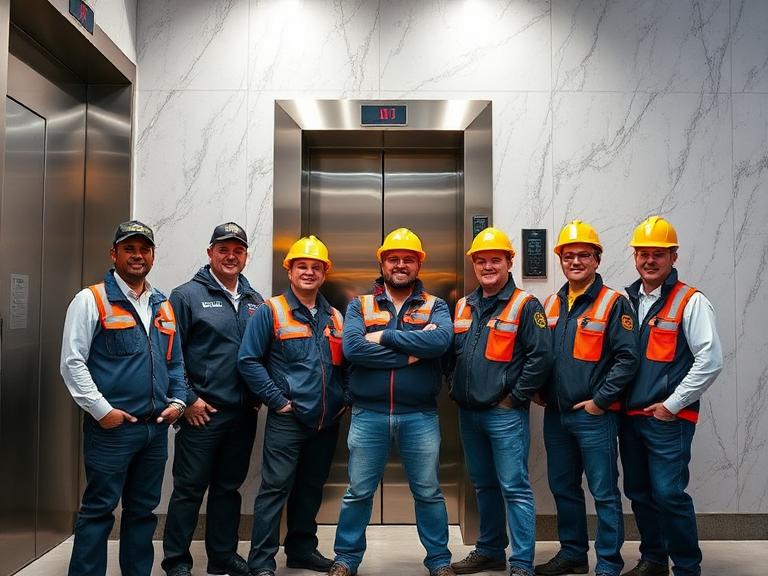
Maintenance AMC Provider vs. Independent Safety Auditor
Property managers must differentiate routine maintenance visits from certified safety audits.
| Assessment Criteria | AMC Maintenance Provider | Independent Elevator Inspector |
| Primary Objective | Routine cleaning, oiling, and basic repairs | Unbiased safety, structural, and code compliance audit |
| Audit Perspective | Audits own service quality | Objective, third-party technical evaluation |
| Dynamic Load Testing | Rarely performs weight-stack load testing | Conducts full 100% & 110% certified load tests |
| Regulatory Role | Equipment service contractor | Authorized safety auditor & CEIG advisor |
| Reporting Output | Field service logs and part replacement bills | Legal compliance report & non-conformity list |
Prime Service Coverage Areas in Hyderabad
Certified technical inspection teams provide elevator safety audits across key commercial and residential sectors:
- Tech & IT Corridors: Hitec City, Gachibowli, Nanakramguda, Madhapur, Rai Durg, Kondapur.
- High-Rise Residential Zones: Tellapur, Miyapur, Kukatpally, Manikonda, Puppalguda, Kompally.
- Commercial & Central Districts: Banjara Hills, Jubilee Hills, Somajiguda, Begumpet, Abids, Secunderabad.

Frequently Asked Questions
1. What is included in a lift safety inspection in Hyderabad?
A lift safety inspection includes a thorough technical evaluation of mechanical traction or hydraulic systems, structural brake tests under load, overspeed governor checks, emergency landing operations, door safety interlocks, and compliance with statutory CEIG and BIS standards.
2. Why is a lift safety inspection mandatory in Telangana?
Under the Telangana Lifts, Escalators, and Passenger Conveyors Act, elevators must undergo statutory inspections to possess a valid government operating license and ensure passenger protection.
3. How does a safety inspection differ from routine AMC servicing?
AMC servicing handles routine cleaning, oiling, and basic adjustments. A safety inspection is an independent third-party audit designed to verify code compliance, component structural integrity, and validate the quality of AMC work.
4. How often must elevator safety inspections be conducted?
Statutory safety inspections are required at least once per year. High-occupancy commercial properties, IT complexes, and hospitals are recommended to perform safety audits bi-annually or quarterly.
5. What is tested during a dynamic load safety test?
Inspectors apply 100% and 110% rated load capacity to verify holding brake torque, test emergency safety jaws on guide rails, and check buffer compression in the elevator pit.
6. How are Automatic Rescue Devices (ARD) checked during a safety inspection?
Engineers simulate a main grid power cut while the lift is running between floors to test battery discharge, floor leveling precision, and automatic door release mechanisms.
7. Can a lift safety audit help with CEIG license renewals?
Yes. Certified auditors prepare detailed technical compliance reports, resolve safety discrepancies, and assist property owners with CEIG submission requirements.
8. How are wire ropes inspected for safety standards?
Auditors use calipers and visual checks to measure rope diameter reduction, count broken crown wires per lay length, examine internal rust, and test rope tension equalization.
9. What happens if an elevator fails the safety inspection?
The auditor issues an itemized Non-Compliance Report detailing critical points. Once the maintenance provider rectifies the issues, a follow-up audit is performed for final certification.
10. Are light curtains and door interlocks verified during safety audits?
Yes. Engineers test 2D/3D infrared curtain response across multiple heights and check electrical-mechanical interlock switches at every landing door.
11. Why is a third-party handover inspection necessary for new buildings?
A handover inspection ensures the builder installed equipment matching contractual safety specifications, complying with BIS codes before the RWA takes over operational responsibility.
12. How do climate conditions in Hyderabad affect elevator safety audits?
Summer thermal stress requires checking drive panel ventilation, while monsoon seasons demand rigorous checks for shaft pit moisture and electrical grounding protection.
13. Do villa home lifts require safety inspections?
Yes. Home lifts require safety checks to verify emergency battery lowering units, manual emergency releases, and door interlocks to ensure family safety.
14. How long does a technical lift safety inspection take?
A standard inspection takes approximately 2 to 4 hours per shaft depending on lift speed, travel height, and equipment configuration.
15. How can property owners in Hyderabad book a safety inspection?
Property managers can contact the safety desk via phone or request an inspection online to schedule a certified engineering team within 24 to 48 hours.