Table of Contents
Lift Motor Replacement Hyderabad | Expert Traction & PMSM Drive Replacement
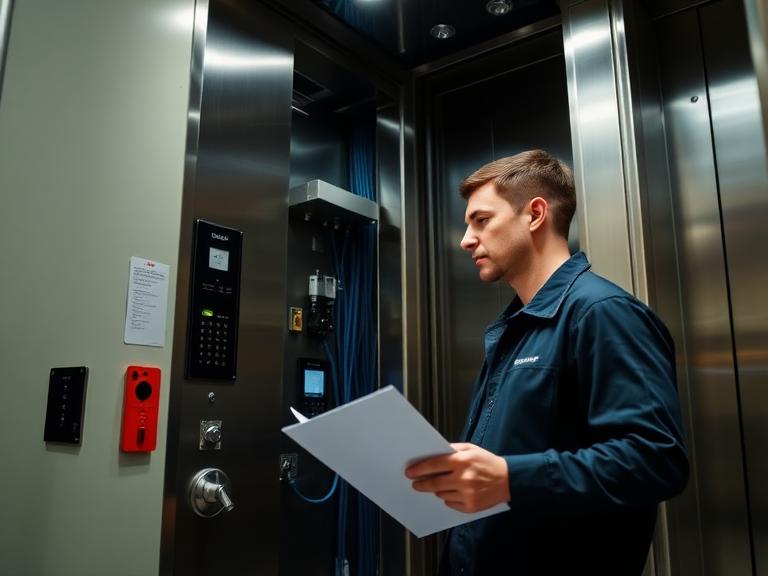
Vertical transportation infrastructure across the Greater Hyderabad Municipal Corporation (GHMC) area—from high-density IT/ITeS quarters in HITEC City, Gachibowli, and Financial District to residential corridors in Kondapur, Miyapur, Tellapur, and Banjara Hills—operates under intense duty cycles. The drive machine (elevator traction motor or hydraulic power unit) serves as the core electromagnetic unit responsible for payload displacement, precise floor leveling, torque generation, and kinetic energy management.
When an elevator machine experiences thermal insulation breakdown, bearing failure, gear backlash wear, or severe electrical burnout due to local grid fluctuations, replacing the lift motor becomes critical. Engaging a certified lift motor replacement specialist in Hyderabad guarantees that new drive machinery meets the exact structural, electrical, and mechanical parameters of your building while staying fully compliant with state safety mandates.
       [ Mechanical / Electrical Failure Diagnosis ]
                            │
              (Audit & Capacity Sizing)
                            ▼
     [ Selection: Geared AC Induction vs. PMSM Gearless ]
                            │
       ┌────────────────────┴────────────────────┐
       ▼                                         ▼
┌──────────────────────────────┐       ┌──────────────────────────────┐
│ Physical Hoistway Alignment  │       │ Microprocessor VVVF Drive    │
│ • Laser Rail Alignment       │       │ • Frequency & Voltage Tuning │
│ • Rope Tension Balancing     │       │ • Brake Pick-Up Calibration  │
│ • Vibration Isolator Mounts  │       │ • Regenerative Energy Setup  │
└──────────────────────────────┘       └──────────────────────────────┘
       │                                         │
       └────────────────────┬────────────────────┘
                            ▼
     [ CEIG Statutory Inspection & Form-B Licensing ]
Elevator Motor Technologies: Technical Comparison
Choosing the right replacement drive technology depends on your building’s height, car capacity, duty cycle, machine room layout, and energy budget.
| Parameter / Feature | Geared Traction Motor (AC Induction) | Permanent Magnet Synchronous Motor (PMSM) Gearless | Hydraulic Power Unit (Submerged/External Motor) |
| Ideal Building Type | Low-to-mid rise (3 to 10 floors) | Mid-to-high rise & MRL applications (5 to 40+ floors) | Low-rise villas, home lifts, heavy freight (1 to 4 floors) |
| Mechanical Efficiency | 65% – 75% (losses via worm-gear friction) | 90% – 95% (direct drive, zero gear losses) | 60% – 70% (hydraulic energy conversion loss) |
| Power Consumption | Standard (higher starting current surge) | Up to 30%–40% lower energy consumption | Higher starting power; power used primarily during ascent |
| Machine Room Need | Requires dedicated overhead machine room | Compact; suitable for standard or Machine-Room-Less (MRL) | Requires compact pump cabinet adjacent to hoistway |
| Noise & Vibration | Moderate ($\approx 60\text{–}68\text{ dB}$) | Ultra-low ($\le 45\text{–}52\text{ dB}$) | Low machine noise, slight hydraulic pump hum |
| Lubrication & Service | Requires periodic gear oil changes | Oil-free, zero gear maintenance | Requires hydraulic fluid checks & seal replacements |
| Expected Lifespan | 12 – 15 years | 20+ years | 10 – 15 years (seal & pump dependent) |
Regulatory Mandates & Statutory Compliance in Telangana
Elevator motor replacement in Hyderabad is not just a standard mechanical swap; it represents a major structural change to the vertical transport system. It is strictly governed by state laws, municipal regulations, and national engineering codes.
               [ Building Management / RWA ]
                             │
            (Initiates Replacement Project)
                             ▼
     [ Licensed Lift Motor Replacement Contractor ]
                             │
     ┌───────────────────────┴───────────────────────┐
     ▼                                               ▼
┌─────────────────────────────────┐     ┌─────────────────────────────────┐
│ State Regulatory Clearances     │     │ National Technical Standards    │
├─────────────────────────────────┤     ├─────────────────────────────────┤
│ • Telangana Lifts Act Compliance│     │ • IS 14665 (Parts 1–5)          │
│ • Structural Stability Verification│   │ • NBC 2016 Code Compliance      │
│ • CEIG Inspection & Registration│     │ • Mandatory ARD Integration     │
└─────────────────────────────────┘     └─────────────────────────────────┘
     │                                               │
     └───────────────────────┬───────────────────────┘
                             ▼
     [ Validated Operating License & Safe Passengers ]
1. Telangana Lifts, Escalators, and Passenger Conveyors Act
- Safety Audit & Notification: Replacing a traction motor requires notifying the Chief Electrical Inspectorate (CEIG) of Telangana. The structural integrity, braking torque, and insulation resistance must be officially logged.
- Re-Certification / License Update: After replacing a motor, the installation must pass field testing by a certified Lift Inspector to validate its Form-B License to Run.
2. Bureau of Indian Standards (BIS) Codes
- IS 14665 (Parts 1 to 5): Dictates specifications for electric traction lifts, covering motor sizing, pulley diameter-to-wire rope ratios ($\ge 40:1$), brake safety factors, and structural bedplate shear stress limits.
- National Building Code (NBC) 2016 (Part 8 – Section 5): Requires mandatory integration of Automatic Rescue Devices (ARD), fire-rated brake mechanisms, and thermal overload switches cut off at specified temperature thresholds.
Step-by-Step Motor Replacement Execution Plan
1.Phase 1: Diagnostic Assessment & Engineering Sizing:Initial Diagnostics & Load Calculations.
- Conduct insulation resistance testing (Megger test) and phase winding resistance analysis to confirm permanent motor failure versus controller repairability.
- Measure net system payload (Contract Load + Car Enclosure Tare Weight) and calculate required counterweight balance ratio (typically $40\%\text{–}50\%$).
- Select exact drive ratings: kW rating, torque output ($N\cdot m$), pole count, nominal speed ($m/s$), and duty cycle rating (e.g., S4 duty for frequent starts/stops).
2.Phase 2: Shaft Safety Isolation & Rigging Setup:De-energization & Mechanical Isolation.
- Lock-Out/Tag-Out (LOTO) main 3-phase incoming power feeds and secondary auxiliary supplies.
- Mechanically clamp counterweight frames and lift car guide shoes securely to guide rails using heavy-duty rail clamps.
- De-tension and unreevel steel wire ropes (or synthetic suspension belts) from the main drive sheave using certified chain blocks and hoist rigging.
3.Phase 3: Motor Extraction & Bedplate Alignment:Old Unit Extraction & Bedplate Retrofit.
- Disconnect motor electrical wiring, encoder interfaces, brake lines, and grounding straps.
- Unbolt worn gear machine/motor assembly and hoist it out using overhead gantry beams.
- Inspect, clean, and level structural machine room steel bedplates. Install new elastomeric vibration isolation pads to eliminate structure-borne noise transmission.
4.Phase 4: Drive Installation & Rope Re-Reeving:Precision Mounting & Laser Alignment.
- Position new PMSM gearless or AC geared machine onto sound-dampening isolation mounts.
- Align drive sheave with counterweight and car hitch points using 3D laser alignment tools to prevent accelerated rope flange wear.
- Re-reeve steel wire ropes, equalize individual rope tension using hydraulic load gauges, and torque mounting bolts to engineering specs.
5.Phase 5: Electrical Integration & Drive Calibration:Variable Frequency Tuning & Safety Testing.
- Wire motor stator windings, dual electromagnetic brake coils, thermistor protection circuits, and high-resolution rotary encoders to the VVVF drive.
- Perform auto-tuning of VVVF inverter parameters (carrier frequency, current loop gains, acceleration/deceleration S-curves).
- Test emergency braking under $125\%$ rated contract load, verify ARD automatic release function, and measure floor leveling accuracy to within $\pm 2\text{ mm}$.

Technical Troubleshooting: Common Motor Failures in Hyderabad
Understanding why elevator motors fail helps building managers choose the right replacement equipment and protective features for local grid conditions:
                  [ Root Causes of Motor Failure ]
                                 │
   ┌─────────────────────────────┼─────────────────────────────┐
   ▼                             ▼                             ▼
┌─────────────────────┐       ┌─────────────────────┐       ┌─────────────────────┐
│ High Ambient Heat   │       │ Voltage Imbalance   │       │ Dusty Environment   │
├─────────────────────┤       ├─────────────────────┤       ├─────────────────────┤
│ Summer temperatures │       │ Grid fluctuations   │       │ Airborne dust &     │
│ exceeding 45°C      │       │ leading to thermal  │       │ construction debris │
│ weaken insulation.  │       │ overload & burnout. │       │ degrade bearings.   │
└─────────────────────┘       └─────────────────────┘       └─────────────────────┘
- Thermal Insulation Breakdown: Hyderabad’s summer temperatures can exceed $45^\circ\text{C}$. Combined with inadequately ventilated machine rooms, internal motor winding temperatures can exceed Class H insulation ratings ($180^\circ\text{C}$ limits), causing turn-to-turn short circuits.
- Phase Imbalance & Single-Phasing: Unstable incoming power or loose grid neutrals cause severe phase current unbalance, driving up motor operating temperatures and scorching stator windings.
- Mechanical Bearing & Sheave Wear: Airborne particulate matter from rapid urban expansion migrates into unsealed motor bearings and worm-gear boxes. This accelerates mechanical friction, causes grooving on traction sheaves, and increases operational noise.
- Brake Drag & Misalignment: Improperly calibrated electromagnetic brake shoes drag against brake drums during travel. This creates constant friction resistance, overheating the motor shaft and burning out stator coils.
Frequently Asked Questions (FAQs)
1. What are the signs that an elevator motor in Hyderabad needs immediate replacement?
Key warning signs include loud mechanical grinding or hums from the machine room, burning insulation odors, frequent thermal trips on the VVVF drive, irregular acceleration or braking jerks, uneven floor leveling, and excessive rope metal dusting on the drive sheave.
2. What is the typical cost of replacing a lift motor in Hyderabad?
Replacement costs vary based on capacity, technology, and building height:
- Standard 4-to-6 Passenger Geared Motors: Range between $\text{₹}75,000$ and $\text{₹}1,30,000$.
- Modern PMSM Gearless Traction Motors: Range from $\text{₹}1,40,000$ to $\text{₹}2,80,000+$ depending on kW capacity, drive configuration, and hoistway structural demands.
3. Can I convert an older geared motor lift to a modern PMSM gearless motor system?
Yes. Converting a geared traction machine to a Permanent Magnet Synchronous Motor (PMSM) gearless system is a popular modernization step. It reduces operational noise, lowers power consumption by up to $35\%$, eliminates gear oil maintenance, and delivers smoother ride performance.
4. How long does a full lift motor replacement take?
A standard motor replacement takes 1 to 3 working days once equipment is on-site. This timeframe includes removing the old motor, bedplate alignment, installing the new drive machine, rope re-reeving, VVVF drive auto-tuning, and safety load testing.
5. Is CEIG approval mandatory after replacing a lift motor in Telangana?
Yes. Replacing a lift motor is considered a major modification under the Telangana Lifts, Escalators, and Passenger Conveyors Act. The work must be documented by a licensed elevator contractor and inspected by the Chief Electrical Inspectorate (CEIG) to keep your Form-B License to Run valid.
6. Why do lift motors burn out frequently during Hyderabad summers?
High ambient summer temperatures (often exceeding $45^\circ\text{C}$) combined with inadequately ventilated machine rooms and frequent grid voltage fluctuations strain motor windings. High usage cycles cause winding temperatures to exceed safe insulation thresholds, leading to electrical shorts.
7. Should I replace my VVVF drive when replacing the lift motor?
Replacing the VVVF inverter drive alongside the motor is strongly recommended if your existing drive is over 10 years old or incompatible with modern PMSM motor feedback encoders. A matched motor-drive pair ensures optimum torque control, high energy efficiency, and reliable floor leveling accuracy.
8. What warranty should I expect on a new elevator replacement motor?
Reputable lift contractors in Hyderabad provide a 12 to 24-month manufacturer warranty on new drive motors, along with a labor warranty covering installation alignment and drive calibration.
9. What motor capacity (kW) is required for a 6-passenger residential elevator?
A standard 6-passenger ($408\text{ kg}$) traction lift running at $1.0\text{ m/s}$ speed typically requires a $3.7\text{ kW}$ to $4.5\text{ kW}$ motor, depending on counterweight ratio, car frame weight, and drive gear ratios.
10. How does a PMSM gearless motor save energy compared to a geared motor?
PMSM motors use high-coercivity permanent magnets instead of electromagnetic field windings. They eliminate mechanical losses from worm gears, operate at higher efficiency ($\ge 92\%$), and generate less waste heat, cutting total energy draw.
11. What safety precautions are taken during the motor replacement process?
Technicians follow strict safety protocols: Lock-Out/Tag-Out (LOTO) electrical isolation, double mechanical clamping of counterweight frames and car safety gear to guide rails, using rated overhead gantry cranes, and wearing fall arrest harnesses inside the hoistway.
12. Do Machine-Room-Less (MRL) elevators use different replacement motors?
Yes. MRL elevators use compact, low-profile PMSM gearless motors designed to mount directly onto hoistway guide rails or overhead structural beams, eliminating the need for a rooftop machine room.
13. Can a damaged elevator motor be rewound instead of completely replaced?
Motor rewinding is an option for minor insulation degradation in standard AC induction motors. However, rewinding often reduces motor efficiency by $2\%\text{–}5\%$, increases operating heat, and offers a shorter service life. Complete replacement with a modern unit is generally more cost-effective over the long term.
14. How does motor replacement impact the elevator’s Automatic Rescue Device (ARD)?
When installing a new motor or changing motor technology (e.g., geared to gearless), the ARD system must be re-calibrated. Battery power ratings, brake release voltages, and rescue travel speeds must be synchronized with the new motor’s electrical requirements.
15. What maintenance is required for a newly installed PMSM gearless motor?
PMSM gearless motors require minimal maintenance: periodic visual checks of mounting torques, inspecting brake pads for wear, checking encoder alignment, and verifying that motor cooling vents remain free of dust and debris.